

By Samantha Ofole-Prince
Most of us know Shakespeare. We met him in school, as verse to be memorized, and rarely heard him in a voice that sounded like ours. Page Kennedy’s short film “Macbeth in Compton” changes that by transplanting the play to early-1990s Compton, California, where young rappers chase fame, and it sounds right at home.
The film follows a rapper’s ambition from its first taste of power, showing how the hunger for status and control can corrupt. It opens as Mac (Kennedy), an aspiring rapper, is welcomed into Skid Row Records by its CEO, Duncan (Russell Hornsby), on Chaining Day, a milestone ritual. Soon after, Lady M (Candice Renée), Mac’s mistress and a former rapper herself, urges him to murder Duncan and take the crown. In this world, the crown is something rap already understands: turf, a label, a throne in the streets.
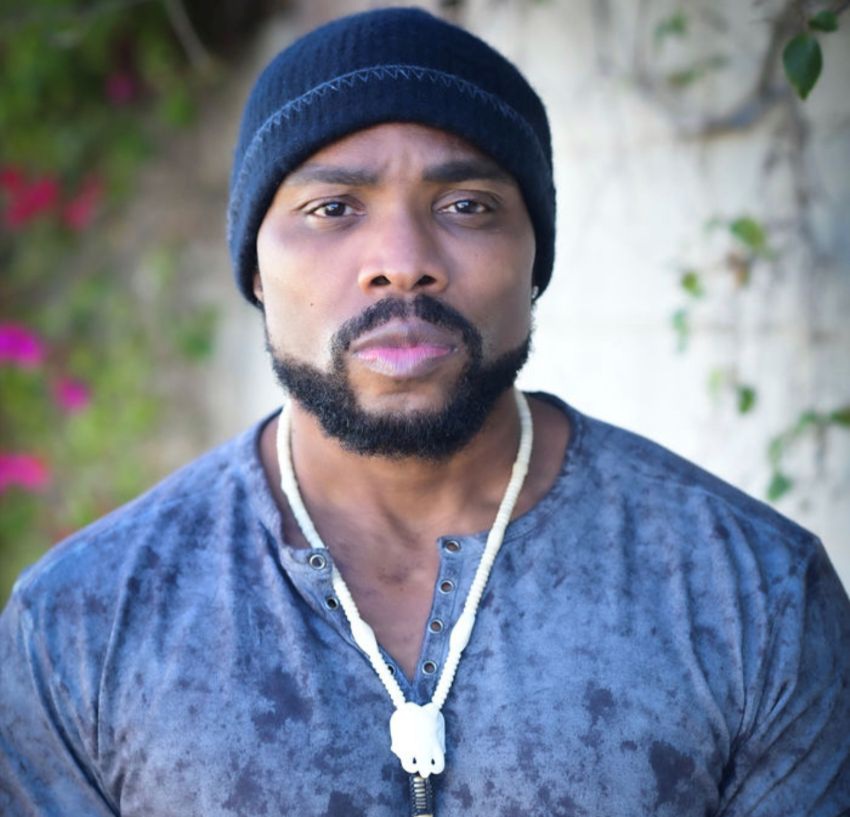
Kennedy, who starred opposite Jason Statham in the sci-fi action movie “The Meg,” wrote, directed and executive produced the film and plays Mac. Every line is Shakespeare’s, he says, except for one rap. Subtitles in the characters’ own language help every viewer follow along.
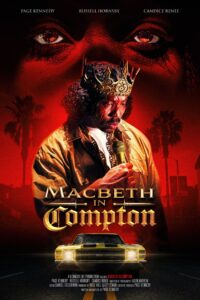
The film rests on three performances. Renée’s scene persuading her hesitant partner to kill Duncan is among its strongest, and she delivers “He that’s coming must be provided for” with cold intent. Her energetic rap, the film’s only departure from the play, feels entirely natural. The murder itself is gripping, with the camera panning fluidly around the action and the music and mood matching the story. At the BronzeLens Film Festival, where the film was an Official Selection with three nominations (Best Short, Best Actor for Kennedy and Best Actress for Renée), she took home Best Actress.
Hornsby brings serious credentials to Duncan. The Oakland-born actor played opposite Denzel Washington and Viola Davis in the Oscar-nominated “Fences,” and more recently appeared as Charles Flenory on “BMF” and in “The Hate U Give.” An actor seasoned in August Wilson’s language is well suited to Shakespeare’s, and his Duncan gives the film its weight.
The film also keeps the play’s psychological core: unchecked ambition, guilt and moral collapse. Macbeth’s monologues are already confessional, internal and rhythmic, which suits the form. Rap has a long tradition of rise-and-fall stories, and Mac’s arc, from success to paranoia, is the same cautionary tale.
Kennedy is not the first to move Shakespeare into a new world. The Indian director Vishal Bhardwaj adapted three Shakespeare tragedies into Hindi-language films. Aneil Karia’s recent “Hamlet,” starring Riz Ahmed, sets the play in modern London within a South Asian community and keeps the original text, abridged and reordered. The instinct is the same: keep Shakespeare’s words and change the world around them. Kennedy’s film runs 19 minutes to Karia’s 114, and it is the briefer one that leaves you wanting more.
For Kennedy, an actor, rapper, writer and director known for Netflix’s “The Upshaws,” the purpose is plain. Many of us know the name, but he wants audiences to feel that Shakespeare belongs to them. “I created this so that I could introduce Black people to Shakespeare,” he said. “That is my overall goal in this. And in making it cool for them and to them, it makes it cool to everyone else in the world.”
That goal has a natural audience beyond America. Shakespeare is a familiar name in many African schools, and rhythmic, spoken-word storytelling runs deep in the region’s own traditions. “Macbeth in Compton” shows how easily the two can meet. After BronzeLens, the film also played at the Pan African Film Festival.
Few Shakespeare adaptations sound like this one. It makes viewers want to read more Shakespeare, just as Kennedy hopes. With this film, Page Kennedy hasn’t just adapted Shakespeare. He has handed him the mic.
Samantha Ofole-Prince is a U.S. based journalist and movie critic who covers industry-specific news that includes television, film and music.