

By Ruth Akpan
Nigeria’s most historic and oldest newspaper, Daily Times of Nigeria, has turned 100—a magnificent milestone that very few institutions can claim. Founded on June 1, 1926, in colonial Lagos, when the idea of an independent Nigeria was still a distant aspiration, the newspaper has survived and evolved through some of the most consequential chapters in the country’s history—from colonial rule and political emancipation to independence, military coups, civil war, democratic transitions, economic upheavals and the digital revolution.
For a newspaper to survive for a century is no ordinary feat. For one to spend those hundred years chronicling the birth pains, triumphs, turbulence, personalities and defining moments of an entire nation is an even more extraordinary achievement.
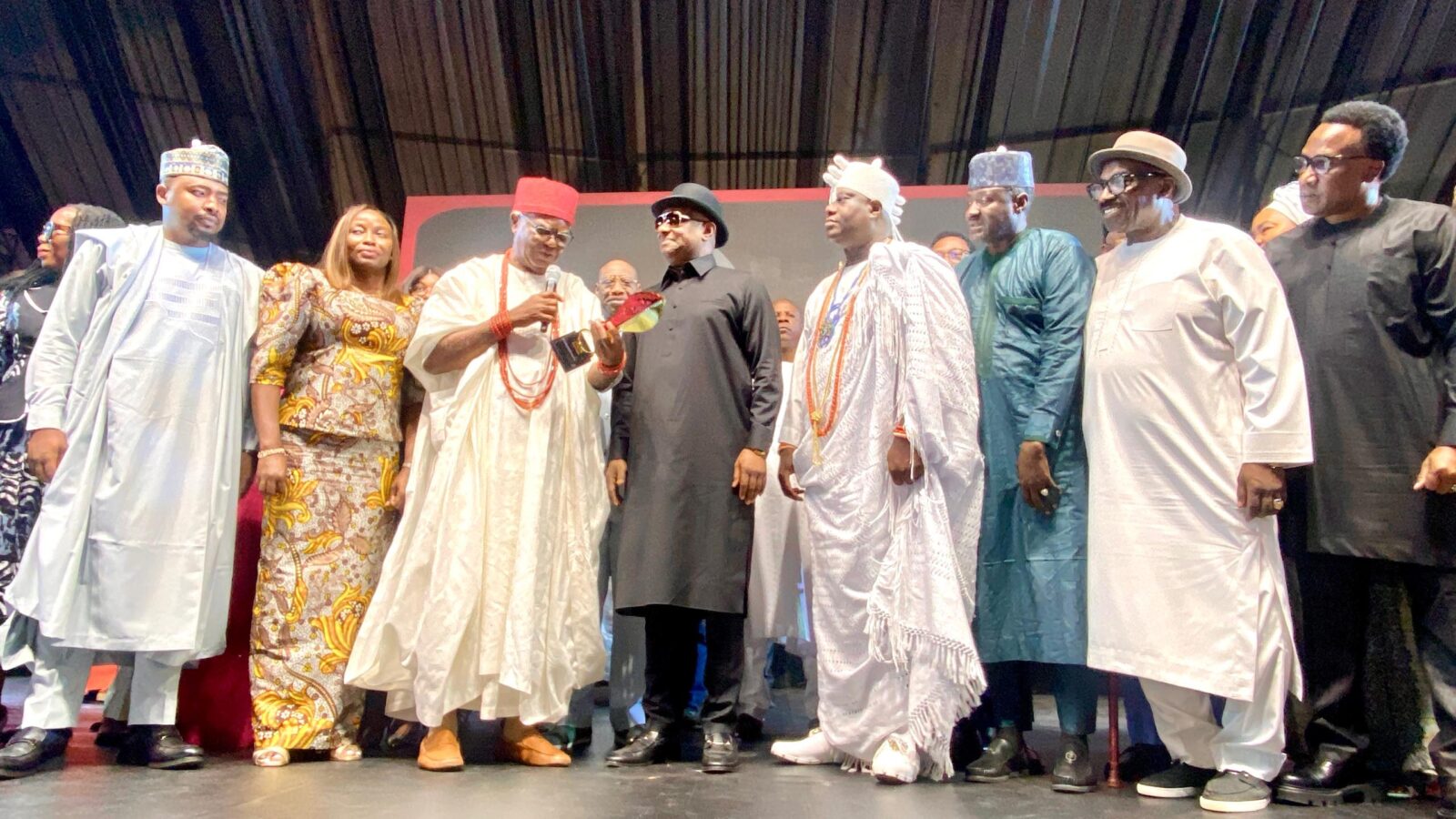
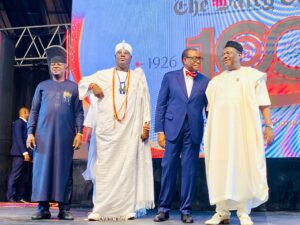
That was the profound significance surrounding the grand Daily Times Nigeria Centenary Celebration, which brought together an impressive constellation of political leaders, former heads of government, serving governors, ministers, captains of industry, traditional rulers, media proprietors, veteran journalists, public intellectuals and other eminent Nigerians at the ThisDay Dome in Abuja.
It was an occasion where history appeared to step out of the pages of old newspapers and take its place among the distinguished guests.
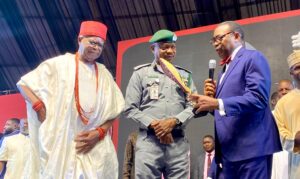
The atmosphere carried the unmistakable dignity of a national institution celebrating an extraordinary chapter in its existence. There was nostalgia for the golden years, admiration for the men and women who built the newspaper, appreciation for those who have sustained its legacy and, above all, a determination to ensure that the centenary would not represent an ending but the beginning of another ambitious chapter.
With its theme of “100 Years: Honouring the Past, Shaping the Future,” the celebration beautifully captured the dual character of the occasion. Daily Times was looking back at a century of journalism while simultaneously looking forward to the possibilities of the next hundred years.
When Richard Barrow and Ernest Ikoli established the newspaper in 1926 as a modest four-page daily in colonial Lagos, Nigeria was a profoundly different society. The country was still under British colonial administration, political nationalism was gradually gathering momentum and the idea of an independent Nigerian nation remained a dream being pursued by a determined generation of nationalists.
Daily Times grew alongside that dream, its pages becoming a platform through which Nigerians encountered the issues, personalities and events shaping their society. From the agitation for self-government to the excitement of independence in 1960, from the turbulence of the First and Second Republics to the military coups and the Nigerian Civil War, the newspaper remained an important chronicler of the nation’s journey.
It reported the speeches of political leaders, the controversies of successive administrations, the changing fortunes of the economy, the struggles of ordinary citizens and the emergence of new social and cultural identities.
Over time, Daily Times became much more than a newspaper delivered to readers each morning. It became part of the rhythm of Nigerian life.
Its historic Kakawa Street headquarters in Lagos became a familiar landmark in the country’s media landscape, while the newspaper itself grew into one of the most influential publications in West Africa. At the height of its glory in the 1970s and 1980s, Daily Times was widely regarded as the largest circulating newspaper in West Africa.
For generations of Nigerians, the newspaper was a trusted companion at breakfast tables, in offices, shops, public institutions and homes. Its pages carried election results, government announcements, business information, political commentary, features, photographs and the stories that gave readers a sense of what was happening within the country and beyond its shores.
The significance of that heritage was not lost on the organisers of the centenary celebration.
Indeed, the Abuja event seemed to deliberately bring together the various strands of the newspaper’s extraordinary history.
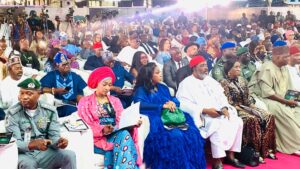

Veteran journalists who had spent decades working in the industry mingled with younger professionals. Former editors and reporters reunited with colleagues and friends. Media proprietors who had themselves become towering figures in Nigerian journalism joined the celebration of an institution that had helped shape the very industry in which they made their names.
Among the distinguished media personalities who graced the occasion were the Publisher of Vanguard Newspapers, Mr. Sam Amuka-Pemu, veteran journalist and former governor of Ogun State, Aremo Segun Osoba; Chief Onyema Ugochukwu; Dr Yemi Ogunbiyi, Dr Dele Cole; and Prince Nduka Obaigbena, Chairman of THISDAY and ARISE Media Group.
These were men whose own careers formed important chapters in the story of Nigerian journalism. Their appearance at the centenary was therefore more than the attendance of distinguished guests; it represented a meeting of generations and a reunion of some of the country’s most influential custodians of the printed word.
For Mr Fidelis Anosike, Chairman of Folio Media Group and Publisher of Daily Times, the presence of the veterans was deeply significant.
He paid tribute to the men and women who had built the newspaper with their talent, sacrifice, sweat and courage, acknowledging that the Daily Times story could never be complete without recognising those who had carried the institution through its many seasons.
His reflections also turned attention to another defining chapter in the newspaper’s more recent history—the privatisation and acquisition of Daily Times.
Anosike spoke warmly about the privatisation policy of the administration of former President Olusegun Obasanjo, describing the process as sufficiently transparent to allow a group of young Nigerian entrepreneurs to compete fairly for the historic institution.
He recalled that the team that led the bid was made up largely of young Nigerians, many of them in their thirties, who were determined to demonstrate that Nigerian entrepreneurs possessed the financial ingenuity, managerial competence and professional sophistication required to operate major corporate institutions.
For Anosike, the acquisition represented more than a business transaction. It was proof of what Nigerian enterprise could achieve when given a fair opportunity.
He recalled the rigorous technical, financial and managerial assessments that preceded the acquisition and praised the National Privatisation Council for maintaining what he described as a transparent and level playing field.
His words carried particular significance against the backdrop of a newspaper that had itself become a symbol of Nigeria’s institutional evolution.
Daily Times had been listed on the Lagos Stock Exchange in 1975, marking another important chapter in its corporate history and reinforcing its position as one of the country’s pioneering media institutions.
Now, under new ownership and navigating a radically transformed media environment, the newspaper is attempting another reinvention.
The centenary programme consequently looks beyond celebration to renewal, with plans around a digital-first newsroom, data journalism, video, podcasts, media literacy initiatives and training fellowships for young journalists.
Perhaps the most ambitious of these initiatives is the proposed digital archive, a project of immense historical value that seeks to make a century of Daily Times editions accessible to researchers, students, historians, journalists, educators and members of the public.
The old pages of a newspaper often reveal what official documents cannot fully capture—the mood of a nation at a particular moment, the language of political debate, the anxieties of ordinary people, the personalities who dominated public consciousness and the issues that occupied society.
Preserving those pages therefore means preserving fragments of Nigeria’s collective memory.
That philosophy also found expression in the unveiling of The Nigerian Grand Book, one of the most significant highlights of the centenary celebration.
The imposing publication, conceived as a major documentation of Nigeria’s national journey, fitted naturally into the anniversary of a newspaper that had spent a hundred years documenting that very journey.
Representing the President of the Federal Republic of Nigeria, Bola Ahmed Tinubu, GCFR, was the Secretary to the Government of the Federation, Senator George Akume, who delivered the President’s message at the ceremony.
President Tinubu described Daily Times as one of the defining chroniclers of Nigeria’s political, social and democratic evolution, noting that its pages had captured the personalities, events and aspirations that shaped the country from the colonial period through independence and the emergence of contemporary democracy.
He described the newspaper’s century of existence as a testament to endurance, relevance and institutional resilience.
The President also gave his endorsement to the philosophy behind The Nigerian Grand Book, stressing the importance of preserving the nation’s history and learning from it.
According to him, the lessons of history must not merely be preserved for nostalgia; they must be used to guide the future.
It was a sentiment that beautifully complemented the central philosophy of the centenary.
The event also attracted an impressive array of political leaders.
Three serving state governors—Engr. Abdullahi Sule of Nasarawa State, Alhaji Mohammed Umar Bago of Niger State and Dr Dauda Lawal of Zamfara State—were present, while the National Chairman of the All Progressives Congress, Prof. Nentawe Yilwatda, attended alongside members of the party’s National Working Committee.
The federal cabinet was represented by several prominent ministers, including Hajiya Hannatu Musawa, Minister of Tourism, Culture and Creative Economy; Barrister Festus Keyamo, Minister of Aviation and Aerospace Development; and General Christopher Musa (rtd.), Minister of Defence.
Also present was the Deputy Speaker of the House of Representatives, Rt. Hon. Benjamin Kalu, alongside former Governor of Ebonyi State, Senator Sam Egwu, and Comptroller-General of the Nigeria Customs Service, Bashir Adewale Adeniyi.
The gathering assumed an even more majestic dimension with the presence of prominent traditional rulers.
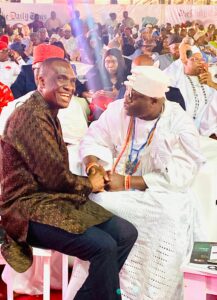
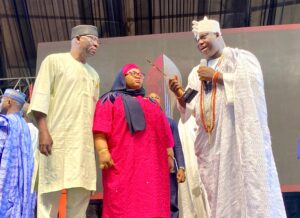
His Imperial Majesty, Oba Adeyeye Enitan Ogunwusi, Ojaja II, Ooni of Ife, graced the ceremony, alongside His Royal Majesty, Igwe Nnaemeka Achebe, Obi of Onitsha, and His Royal Highness, Luka Ayedoo Nizassan III, Etsu Kwali and Chairman of the Council of Chiefs for the Kwali Area Council of the FCT.
Their presence added a regal flourish to an occasion already steeped in history, while symbolising the enduring place of traditional institutions in the Nigerian story that Daily Times has spent a century chronicling.
The intellectual centrepiece of the celebration was the keynote address delivered by Dr Akinwumi A. Adesina, former President of the African Development Bank and former Minister of Agriculture.
Adesina used the historic occasion to look beyond the achievements of the past and challenge Nigerians to imagine the country they intend to leave for generations yet unborn.
With characteristic passion, he emphasised the importance of building stronger institutions, investing in young people, creating opportunities and developing a clear national vision.
Nigeria, he argued, cannot afford to continue running yesterday’s race.
The future requires a different kind of imagination.
For him, the Daily Times centenary itself represented the power of continuity—the responsibility of one generation to honour what it inherited, improve upon it and hand over something stronger to those coming behind.
He expressed his conviction that Nigeria remains a country with immense possibilities and urged citizens to unite around the task of building a stronger, more prosperous and more confident nation.
He also challenged Daily Times to preserve its rich heritage while contributing to the continuous advancement of journalism.
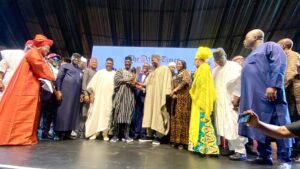
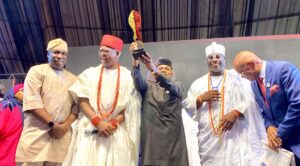
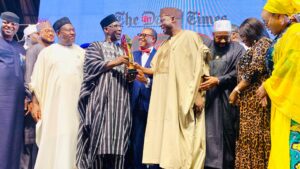
Then came one of the most eagerly anticipated aspects of the evening—the DTN@100 Times Heroes Awards, through which the newspaper celebrated an extraordinary collection of Nigerians and institutions whose contributions have made significant impact across various sectors of national life.
The awards transformed the centenary celebration into a glittering roll call of achievement.
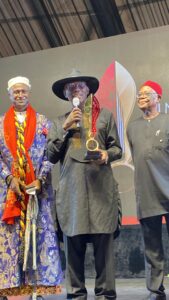
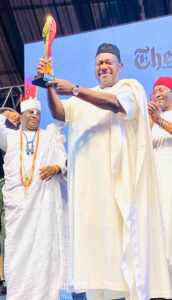
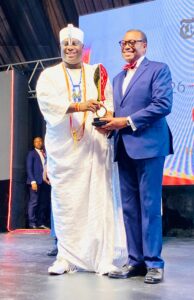
The honours cut across virtually every sphere of national endeavour. Business titan Aliko Dangote emerged as Business Icon of the Century, while Dr Akinwumi Adesina received the Global Impact Award and Senator George Akume was named Public Impact Person of the Decade. Ooni Adeyeye Enitan Ogunwusi received the Community Impact Award, while Zenith Bank founder Jim Ovia was celebrated as Change Maker of the Century. Dr Mahmood Ahmadu was named Nigeria Global Champion, MTN Nigeria took the Digital Company of the Decade honour and Dame Adaora Umeoji, GMD/CEO of Zenith Bank, emerged Person of the Year.
The governors also featured prominently among the honourees. Pastor Umo Eno of Akwa Ibom State emerged Outstanding Governor, South-South, while Babajide Sanwo-Olu of Lagos State was recognised as Outstanding Governor, South-West. Dauda Lawal of Zamfara State took the North-West honour, Abdullahi Sule of Nasarawa State received the North-Central award, while Agbu Kefas of Taraba State was recognised for the North-East. Mohammed Umar Bago of Niger State emerged Governor of the Year, while Hope Uzodimma of Imo State received the Governor of the Decade Award.
The ceremony also recognised the contributions of lawmakers and public officials.
Rt. Hon. Benjamin Okezie Kalu, Deputy Speaker of the House of Representatives, was named Lawmaker of the Year, House of Representatives, Dr Olubunmi Tunji-Ojo, Minister of Interior, received the Transformative Minister of the Year Award, Festus Keyamo, Minister of Aviation and Aerospace Development, received the Minister of the Decade Award, Nyesom Wike, Minister of the Federal Capital Territory, emerged as Impactful Minister of the Year, Bashir Adewale Adeniyi, Comptroller-General of the Nigeria Customs Service, received the Public Officer of the Year Award, the Nigerian Revenue Service was named Government Agency of the Year and Prof. Nentawe Yilwatda, National Chairman of the APC, received the Politician of the Year Award.
In the energy and development sectors, Prof. Anthony Adegbulugbe, Chairman/CEO of Green Energy International Ltd, received the Energy Company of the Decade recognition, EMADEB ENERGY Group received Energy Company of the Year, The Bank of Industry received the National Development Award, the Trade Modernization Project was honoured as Transformative Project of the Year, The National Council on Climate Change received the Climate Responsibility Award, ACReSAL—Agro-Climatic Resilience in Semi-Arid Landscapes—was recognised with the Project Sustainability Award, and Prof. Banji Oyelaran-Oyeyinka, Special Adviser on Industrialisation at the African Development Bank, received the Social Impact Award.
The celebration also recognised the accomplishments of distinguished Nigerian women.
Mrs Folorunso Alakija, Executive Vice Chairman of FAMFA Oil, received the Life and Legacy Award, Mrs Jane Egerton-Idehen, CEO of NIGCOMSAT, received the Enterprise Award, and Dr Mrs Olayinka Fayomi, Group Chairperson of Foreign Investment Network, received the Global Investment Leadership and Economic Diplomacy Award.
And for the media industry, Prince Nduka Obaigbena was honoured with the Media Icon of the Decade Award.
The Times Heroes Change Maker Awards further extended the celebration to other notable Nigerians.
High Chief Government Oweizide Ekpemupolo, Chairman of Tantita Security Services Nigeria Ltd, received the National Security Award, Abike Dabiri-Erewa, Chairman/CEO of Nigerians in Diaspora Commission, was recognised with the Nigeria Rising Award, and Rt. Hon. Tajudeen Abbas, Speaker of the House of Representatives, received the Parliamentary Personality of the Decade Award.
Former Senate Presidents and parliamentary leaders were also honoured, including Senator David Mark, Senator Bukola Saraki, Senator Aminu Tambuwal, and Rt. Hon. Olufemi Hakeem Gbajabiamila, Chief of Staff to the President, who received the Parliamentary Development Awards.
The gathering was more than a celebration; it was a vivid reflection of an institution that has survived by adapting to the changing face of Nigeria.